Distant Volume
The untamed clarity of HIWATT Amplifiers

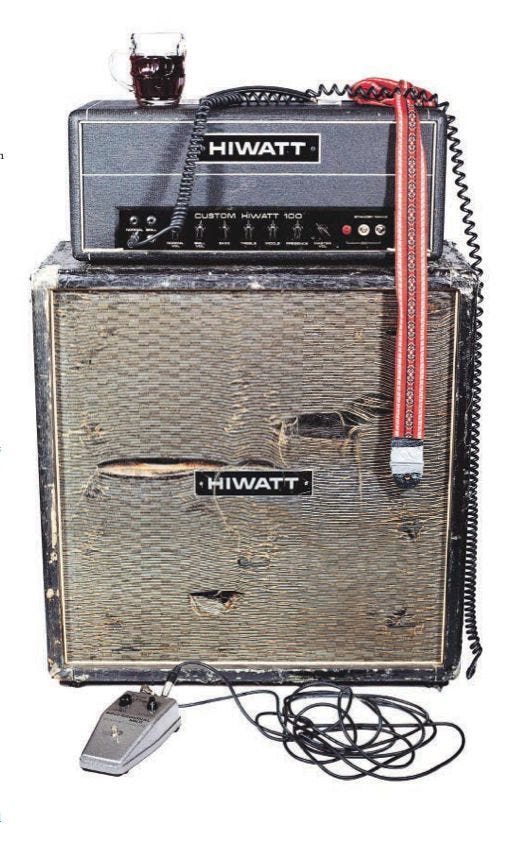
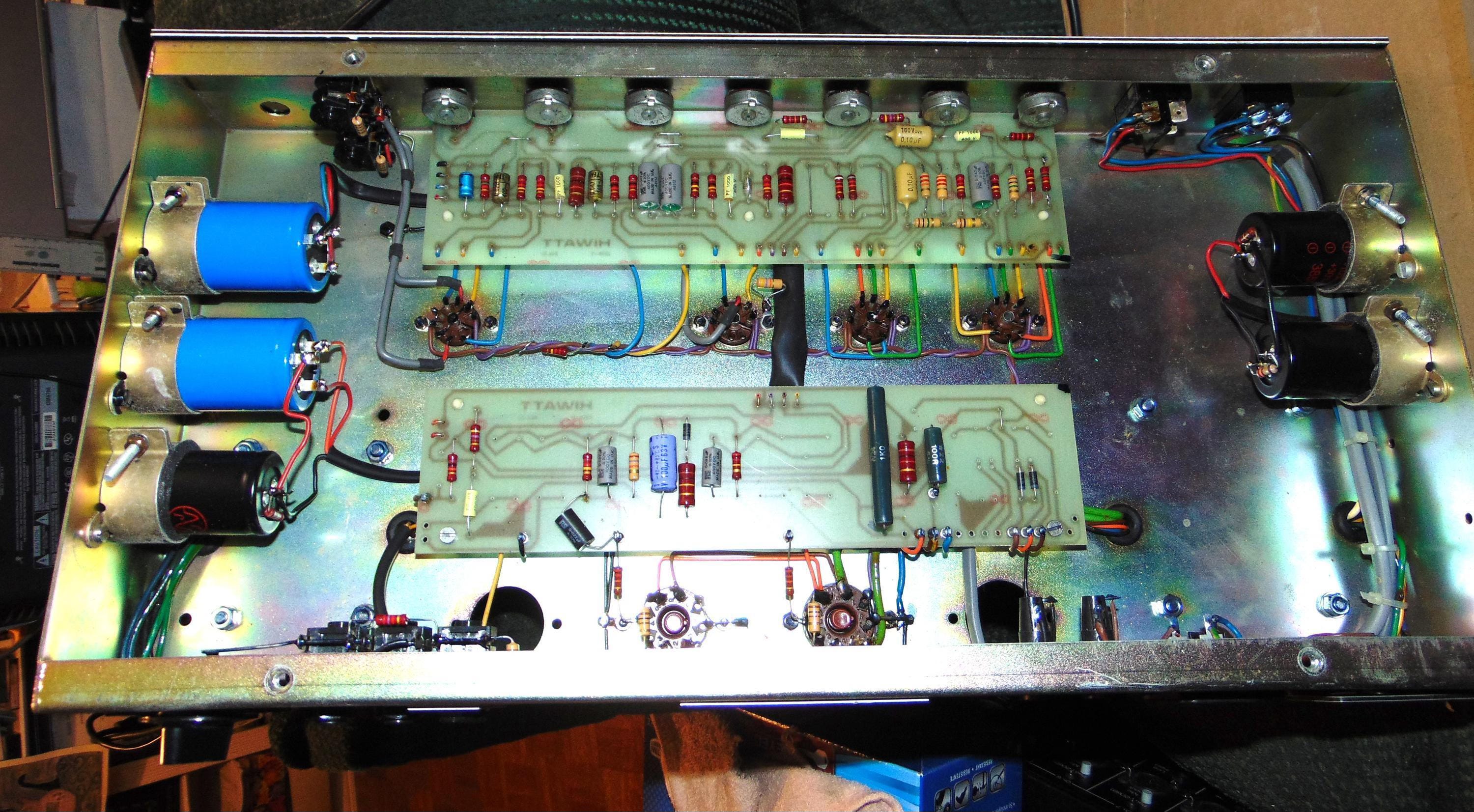
The 1990s DR103 Custom 100 sat on my bench like a patient with the wrong diagnosis. PCB construction immediately told me this wasn’t from the Reeves era. The client had been clear about what he wanted. More gain at lower volumes. Less harshness. More midrange body. He wanted it to sound more like the HIWATT amplifiers he had heard on records.
I opened the chassis and already suspected we might be working against the nature of the amplifier itself.
This particular DR103 reflected a different set of design priorities than the original HIWATT philosophy. Instead of the legendary clarity and headroom the name was built upon, what came through was buzzy, aggressive gain with a scooped midrange that felt underwhelming. The build quality was passible, but it lacked the unmistakable precision that defined Reeves-era HIWATT construction. Where early HIWATT amplifiers felt like broadcast equipment, this felt more like an amplifier that had addapted to contemporary mass production technics.
I made progress on the modifications. I adjusted voicing, tamed some upper harmonic sharpness, and worked to coax more body out of the midrange. But eventually I had to explain something honestly to the client. This amplifier could be improved, but it was never going to become the type of amplifier he truly wanted.
Some amplifiers resist fundamental transformation.
HIWATT amplifiers, when built around their original design intent, do one thing extraordinarily well. They reveal. They do not rely on compression to smooth playing inconsistencies. They do not add thickness to mask articulation. They reproduce the signal with remarkable transparency at volumes most other amplifiers struggle to maintain.
For certain players, that becomes incredibly liberating. For others, it can feel unexpectedly demanding.
Dave Reeves and the Engineering Philosophy
To understand why that DR103 felt different, you have to understand what Dave Reeves was building in the mid 1960s.
Reeves came from a background in technical electronics and broadcast equipment. He approached amplifier design as an engineering discipline rather than a pursuit of fashionable guitar tone. His primary goal was stability, reliability, and signal integrity at extreme volume levels.
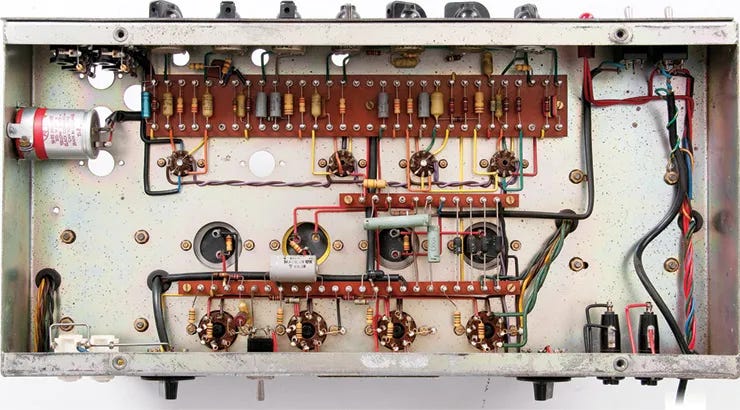
The first time I opened a genuine Reeves-era HIWATT the difference was immediately obvious. The turret board layout displayed an almost obsessive level of wiring discipline. Every wire was routed with intention. Every component was placed with purpose. The lead dress was so methodical it resembled military communication equipment rather than a rock amplifier.
The transformers were massive, chosen not simply for power ratings but for long-term durability and consistency. Reeves understood that professional musicians needed equipment that performed reliably under the physical demands of touring and recording.
Where Marshall amplifiers often embraced power tube saturation and natural compression, Reeves designed HIWATT circuits to resist distortion for as long as possible. The result was enormous clean headroom, tight low-frequency response, and a dynamic range capable of preserving subtle articulation even at extreme stage volumes.
This design philosophy was never about creating a signature amplifier coloration. It was about creating a stable platform that allowed the player’s voice to remain intact.
Live at Leeds and the Sound of Unfiltered Energy
If you want to understand what HIWATT amplification can truly do, The Who’s Live at Leeds offers one of the clearest examples.
Pete Townshend’s tone on that recording demonstrates what happens when an intensely aggressive playing style meets an amplifier that refuses to soften the edges. The sound is massive but still articulate. It is forceful without becoming indistinct. Every windmill strum, every chord accent, every physical interaction between player and instrument remains startlingly clear.
The CP103 stacks behind Townshend were not generating distortion as their primary contribution. Most of the gain came from the amplifiers being pushed to extreme volumes, with occasional use of a Univox Super Fuzz for the most aggressive moments. The amplifiers were providing an enormous and stable foundation capable of translating his physical playing style and those dynamics without collapsing into compression or muddiness. When Townshend attacked the strings, the amplifier responded with authority. When he relaxed his touch, the detail remained intact.
HIWATT amplifiers create space for the player to control intensity rather than allowing the amplifier to dictate it. That transparency can feel unforgiving to players accustomed to relying on amplifier saturation for sustain and smoothness. For players with strong dynamic control, it becomes an incredibly expressive platform.
The mythology surrounding HIWATT often focuses on specific tones or genres. In reality, HIWATT amplifiers are less about a stylistic identity and more about providing the headroom and transparency required to let the player define the sound.
Townshend at Leeds proves that a CP103 can sound absolutely ferocious. It just won’t do the heavy lifting for you.
When the Name Evolves but the Philosophy Changes
The 1990s DR103 on my bench existed during a period when HIWATT manufacturing and ownership had shifted multiple times. Different production eras brought different design goals. Some attempted to preserve Reeves’ original engineering language. Others explored ways to modernize the amplifier to compete with high-gain trends dominating the late twentieth century.
The printed circuit board construction itself was not inherently problematic. Many exceptional amplifiers use PCB layouts successfully. The larger issue was how circuit voicing began shifting toward increased gain and scooped tonal characteristics that moved away from the midrange authority and transparency associated with earlier designs.
From a servicing standpoint, these amplifiers remained functional and usable, but they often lacked the meticulous construction and tonal identity that made Reeves-era HIWATTs legendary.
When I explained to the client that modifications could improve the amplifier but would not fundamentally change its nature, the goal was not to redirect him toward different equipment. It was simply an honest acknowledgment that each amplifier is designed with a specific purpose in mind.
Who HIWATT Amplifiers Serve Best
HIWATT amplifiers tend to reward players who approach tone with precision and intentional control. They respond exceptionally well to articulate picking technique, wide dynamic expression, and sophisticated pedal integration.
Players who rely heavily on amplifier-generated compression or saturation sometimes find HIWATT amplifiers less forgiving. Players who use effects as primary tone-shaping tools often find HIWATT platforms uniquely accommodating because the amplifier remains stable and transparent beneath complex signal chains.
None of this makes HIWATT better or worse than other amplifier designs. It simply makes it specific. When it aligns with a player’s approach, it can be one of the most powerful amplification tools available.
The Reeves Legacy
Vintage Reeves-era HIWATT amplifiers remain deeply respected for their uncompromising construction and disciplined design philosophy. They represent an era when amplifier engineering prioritized durability, tonal consistency, and mechanical precision above market trends.
Modern HIWATT amplifiers vary across production periods, and some contemporary models work hard to preserve aspects of Reeves’ original vision. Others explore new tonal territory with varying degrees of success. Regardless of era, Reeves established a design philosophy that continues to influence amplifier builders today.
Having serviced multiple HIWATT generations, I consistently find that even later models reflect traces of Reeves’ engineering DNA. Certain versions remain especially memorable from a tonal standpoint, but the overarching design philosophy remains recognizable across decades.
Ben’s Final Thoughts
The 1990s DR103 eventually left my shop improved, but it never became what the client initially imagined. The amplifier reflected a different design philosophy, and no amount of component adjustment could completely redefine its identity.
Every time I work on a genuine Reeves-era HIWATT, I am reminded of what happens when disciplined engineering meets a clear musical vision. These amplifiers were never built to be universally adaptable or forgiving. They were built to provide massive, transparent power that allows the player’s voice to exist without interference.
Some players thrive in that environment. Others discover they prefer amplifiers that offer more inherent coloration or compression. Understanding that distinction often determines whether a HIWATT becomes an essential creative tool or simply the wrong instrument for the job.
HIWATT amplifiers do not bend to meet the player. The player rises to meet them.
My full breakdown lives behind the scenes in The Tone Journal.
“Every time I work on a genuine Reeves-era HIWATT, I am reminded of what happens when disciplined engineering meets a clear musical vision.”
Few and far between these days