Touch Sensitivity Is Not a Myth
Why some tube amps feel alive under your hands, and others just get louder

I didn’t set out to build a touch sensitive amp. I set out to build an amp that worked.
That distinction mattered more than I understood at the time.
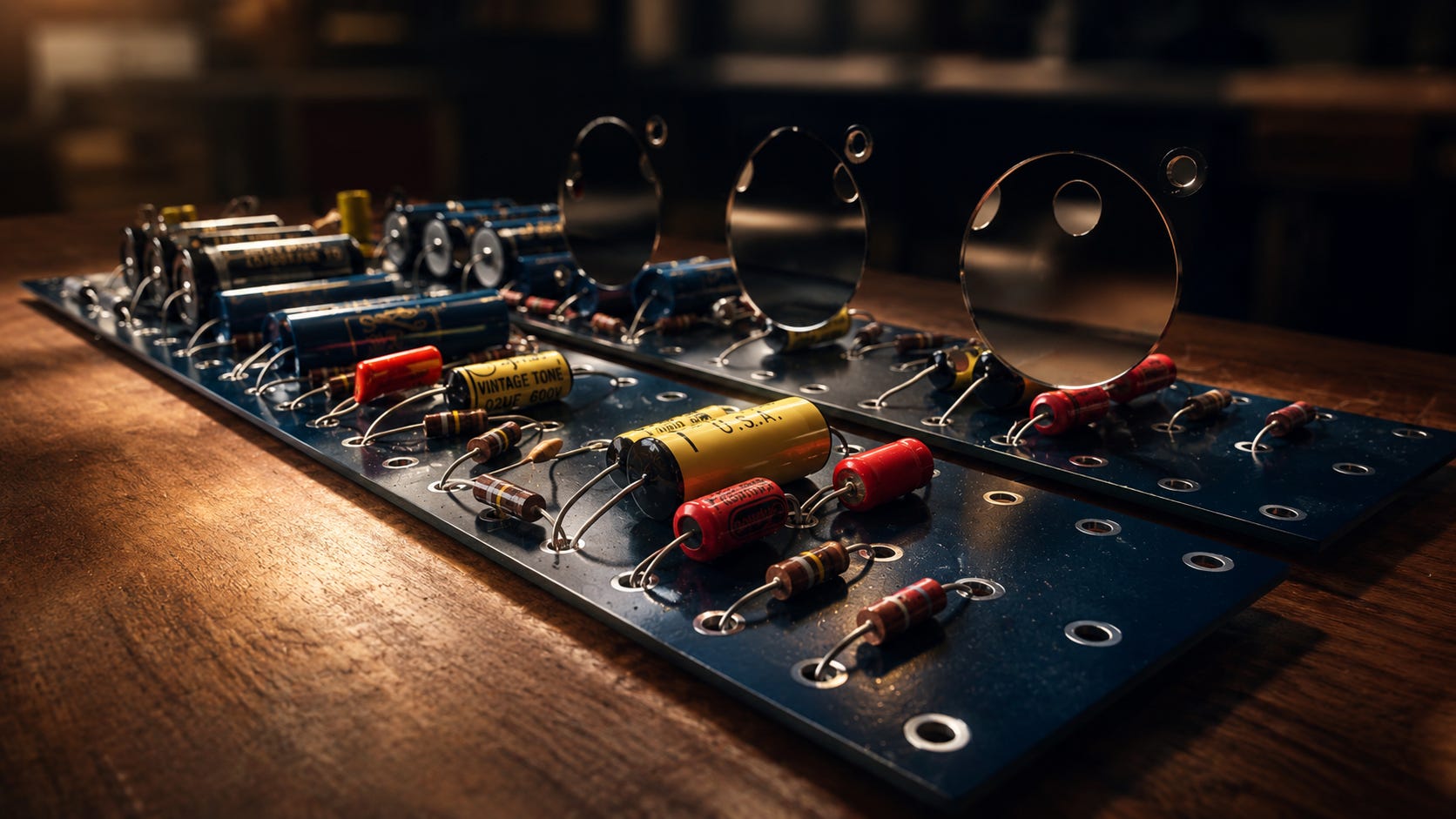
This was the early days, before boutique amp building had a real infrastructure around it. RadioShack was still around but barely, a skeleton of what it once was with only a handful of locations left in Sacramento. The serious stuff came from Metro Electronics downtown, which primarily served the local TV and radio stations and tolerated guys like me picking through their inventory for carbon comp resistors and filter caps. Later I found a couple of surplus electronics shops that were incredible while they lasted, and then they closed their doors too. You worked with what you could get, and what you could get wasn’t always right for the job.
The first amp I ever attempted was a Matchless Spitfire clone. I’d found the layout on Gear Page and had recently played a Matchless for the first time at Skip’s Music. It stopped me cold. I had never actually played an original vintage AC30, and the Matchless was too rich for my blood, so I did what seemed logical. I went home and started building one.
The first iteration didn’t work. I ripped it all apart, started from scratch, and got the second chassis running well enough to bring it to a recording session as an open frame unit, no cabinet, no cover, just a live chassis sitting there while we cut tracks. That amp was built at the kitchen table on a cookie sheet. When we bought our first home in Carmichael I graduated to an old workbench the previous owner had left in the garage, which felt like a serious upgrade at the time.
The problem was that I could build amps that functioned. What I couldn’t yet build was an amp that responded.
I kept going back to the vintage amps I admired, the ones that seemed to have something alive in them, and I kept coming up short in my own work. The prototypes worked in the technical sense. They made sound. They had gain and volume and tone. But they didn’t have lift. They didn’t bloom. They didn’t push back when you dug in or open up when you laid back. They just got louder or quieter, and there’s a real difference between those two things.
What followed was years of chasing that gap. Studying what Leo Fender, Jim Denny, Dumble and Ken Fischer understood intuitively about how a circuit should breathe. Trying different components, different grounding schemes, different approaches to the power supply. Some changes made things worse. Some made things subtly better in ways I couldn’t always explain yet. The knowledge accumulated slowly, the way it does when you’re learning something that can’t entirely be taught.
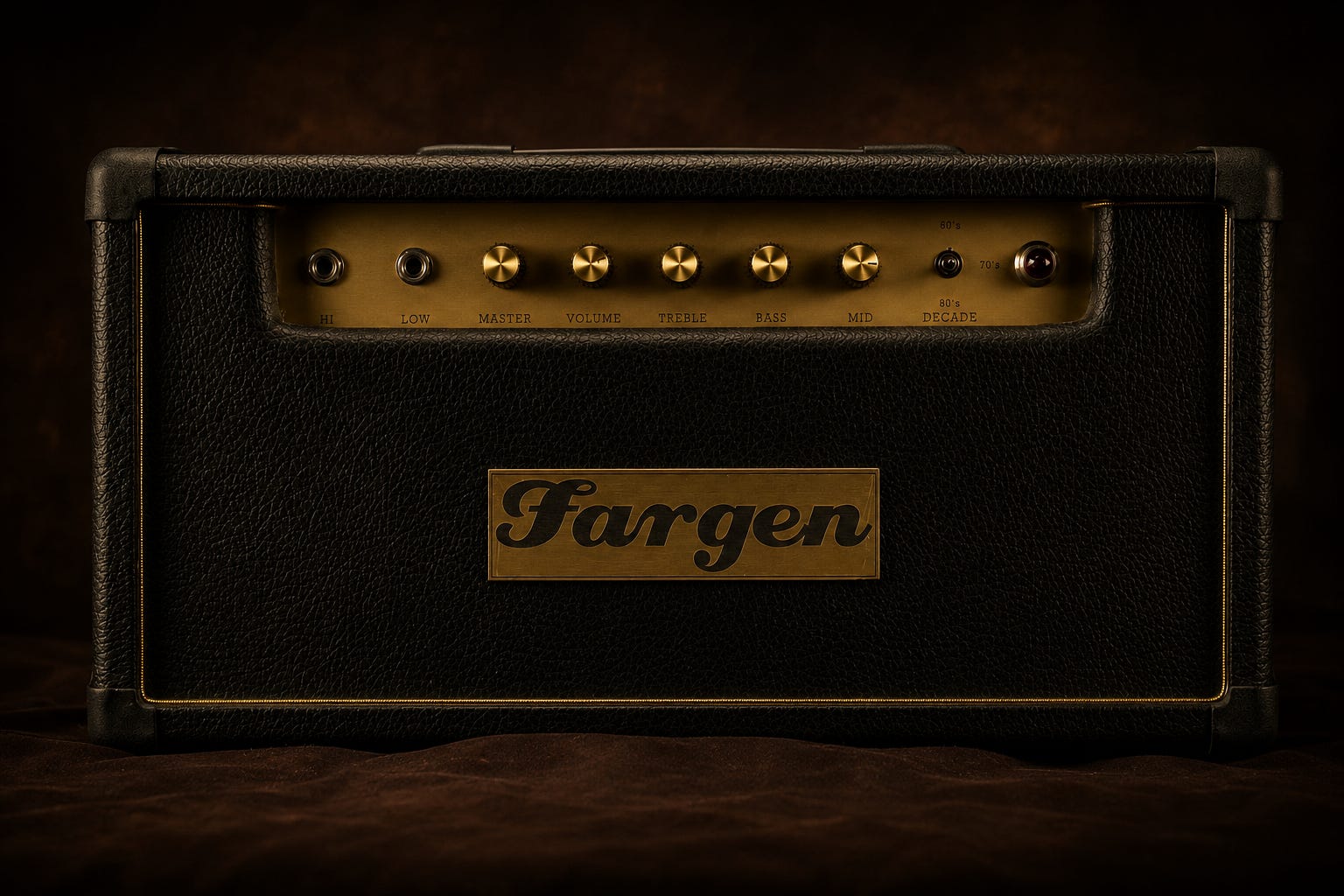
The moment it finally landed was during the development of the first Mini Plex.
The Mini Plex was an attempt to find the territory between a classic Marshall architecture and something I hadn’t heard anyone else do, a dual single ended Class A design that split the difference between familiar and uncharted. It was the kind of circuit decision that either reveals something or collapses on itself, and for a long time I wasn’t sure which way it was going to go.
Then I plugged in and played a note.
Clean sustain at low volume, the kind that just hangs in the air without effort. Real authority from pick dynamics, so that how hard you hit the string actually mattered. Equally at home with single coils and humbuckers without chasing two different amp voices. And when you put a boost or a light overdrive in front of it, the amp didn’t just get louder or fizzier. It responded. It took what you gave it and gave something back.
That was it. That was the thing I had been trying to build.

What Touch Sensitivity Actually Is
The term gets thrown around a lot in amp conversations, usually as a compliment that doesn’t get examined too closely. A player tries an amp, something feels right, and touch sensitive becomes the word for it. Which is fair, because it is the right word. But it’s worth understanding what’s actually happening when an amp earns that description, because it doesn’t happen by accident.
Touch sensitivity is the ability of an amplifier to translate changes in your playing into changes in tone and feel, not just volume. When you dig in, the amp responds with more compression, more harmonic content, more push. When you lay back, it opens up, cleans up, gets more articulate. When you roll your guitar volume back, the whole character of the sound shifts rather than just the level dropping.
That response lives in the relationship between the preamp stage, the phase inverter, the output tubes, and the output transformer. Each of those stages can either preserve the dynamic information coming from your guitar or it can iron it out. A circuit that irons it out early, before the signal ever reaches the power section, gives you an amp that performs but doesn’t respond. It can sound impressive. It just won’t feel alive.
The output transformer is often where the conversation ends up, and for good reason. A quality transformer with the right primary impedance for the output tubes lets the power section breathe. The tubes can move through their operating range in response to your pick attack, compressing naturally when you push and releasing when you back off. Cheap transformers, or transformers that aren’t well matched to the circuit, constrain that movement. The amp has less range to work with, and the player feels it immediately even if they can’t name it.
But the transformer doesn’t work alone. The whole signal path has to be set up to let dynamics survive the trip from input to speaker.
The Preamp Gain Problem
Here’s the thing nobody talks about enough: too much preamp gain doesn’t just change your tone. It hides your hands.
When a circuit stacks too much gain in the preamp stages, the signal gets compressed and saturated before it ever reaches the phase inverter or the output section. The dynamic information, the difference between a hard pick attack and a soft one, between a full strum and a single note, gets flattened out early. By the time the signal reaches the output tubes there isn’t much left to respond to. The power section does its job faithfully, but it’s working with a signal that’s already been stripped of most of its character.
This is why high gain amps can feel like playing into a wall. They’re not broken. They’re doing exactly what they were designed to do. The gain is there, the volume is there, the sustain is there. What isn’t there is the conversation between your hands and the circuit.
Players sometimes chase more gain because they think that’s what’s missing. But more preamp gain is usually the last thing a touch sensitive amp needs. What it needs is enough gain to get the output stage working, and then enough headroom in that output stage to let the tubes do their job. The magic lives in the power section, not the preamp. The preamp’s job is to feed the power section well, not to do all the work itself.
This is one of the reasons single ended Class A designs can be so revealing. There’s no phase inverter splitting the signal, no push pull pair averaging out the dynamics. The output tube sees the signal directly and responds directly. Everything you do with your hands shows up in the sound, which can feel uncomfortably honest if you’re not used to it, and completely addictive once you are.
The Guitar Volume Test
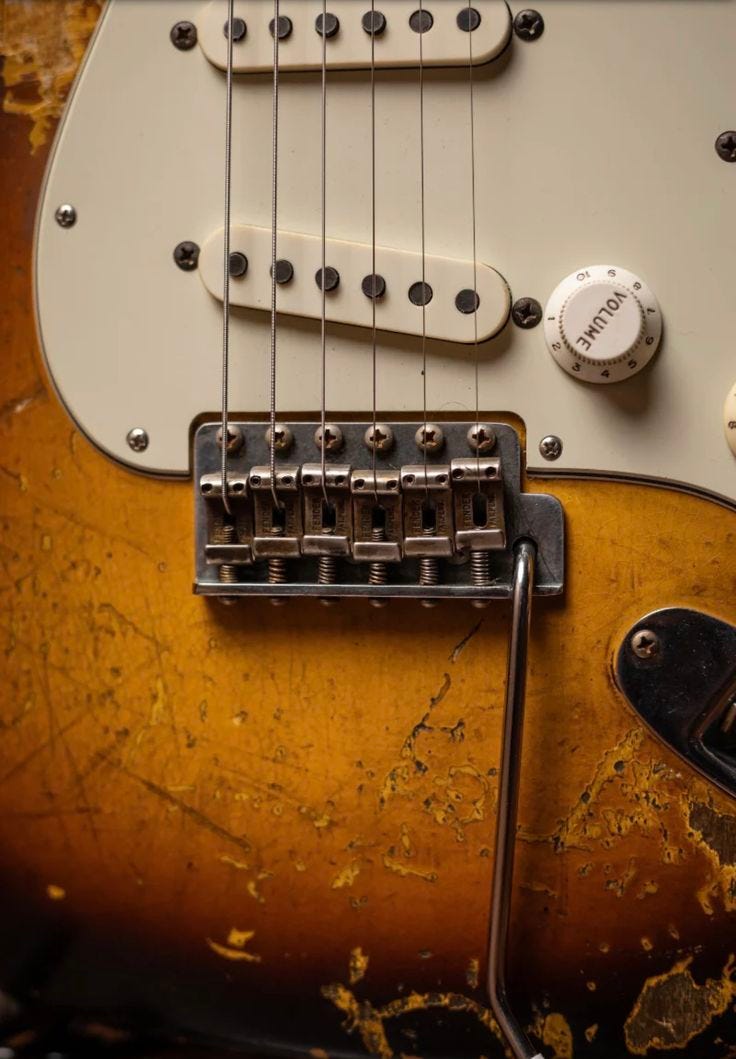
If you want to know whether an amp is truly touch sensitive, the guitar volume knob will tell you faster than anything else.
Set the amp for a sound you like, roll your guitar to 10, and play. Then slowly roll back to 7, then to 5. Don’t touch the amp.
On a stiff, heavily gained circuit, the sound will get smaller. It will lose level and probably lose some high end, and not much else will change. The amp isn’t responding to the input change. It’s just receiving less of it.
On a responsive amp, something different happens. The whole character shifts. At 10 the amp might be pushed and singing. At 7 it might be barking and immediate. At 5 it might be almost clean but with a kind of presence and detail that the wide open sound doesn’t have. Each position on the knob reveals a different voice in the same amp, because the amp is actually tracking what the guitar is doing.
That’s the test. Not specs, not wattage, not tube complement. Roll the guitar back and listen to whether the amp changes character or just changes size.
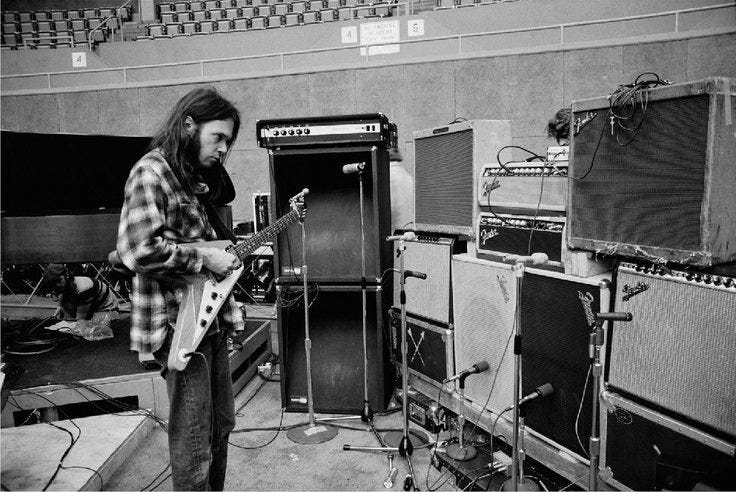
Roy Buchanan did this better than almost anyone. His Telecaster tone wasn’t set and forgotten. It was a constant negotiation between his picking hand, his volume knob, and the amp. The reason that negotiation was possible was that his amp was listening. He wasn’t playing through it. He was playing it. The volume knob was as much an instrument as the guitar.
That only works when the amp has enough range to respond. A stiff amp gives you one sound at different volumes. A responsive amp gives you many sounds, and the player gets to decide which one comes out.
What a Responsive Amp Actually Does
When the circuit is right, four things happen that don’t happen any other way.
It cleans up. Roll back the guitar or play softer and the amp follows you into a cleaner, more open sound without losing its voice. The tone doesn’t just get smaller. It changes texture.
It blooms. Sustain notes don’t just decay. They develop. There’s a point after the initial attack where the note seems to swell slightly, to find its voice, before it finally fades. That bloom is the output tubes and transformer doing exactly what they should.
It compresses naturally. Hard pick attacks get cushioned in a way that feels musical rather than mechanical. The amp pushes back against you in a way that makes playing feel physical and satisfying rather than effortless and characterless.
It responds to what’s in front of it. A boost pedal into a touch sensitive amp doesn’t just get louder. The amp opens up differently, runs the output stage harder, finds a voice it couldn’t get to on its own. The amp and the pedal become a system. Change the input and the whole system responds.
None of that is magic. It’s the result of circuit decisions made at every stage of the design, from the input impedance to the output transformer, each one either preserving or discarding the dynamic information your hands are creating.

The Engineering Behind the Feel
When I’m building an amp, touch sensitivity isn’t a feature I add at the end. It’s a constraint that shapes every decision from the beginning.
The recipe that finally worked for me, the one that started becoming clear during the Mini Plex development and has informed everything since, wasn’t a single discovery. It was a convergence. Grounding schemes that kept noise out without strangling dynamics. Component choices that stayed true to what the vintage builders understood about how a circuit should breathe. Transformers spec’d for the specific output stage rather than whatever was available. And a willingness to take the circuit somewhere unfamiliar when the familiar version didn’t have the lift.
The dual single ended Class A topology of the Mini Plex worked because each output tube operates independently across the full signal cycle. There’s no cancellation, no averaging, no phase inverter in the middle softening the relationship between input and output. What you play goes in, and what the tube does with it comes out, with very little in between to obscure the transaction. That directness is what makes a single ended Class A amp feel so immediate and personal to play.
It also means there’s nowhere to hide. The amp tells the truth about your playing, which is either the most valuable thing an amp can do or the most inconvenient, depending on the day.
The knowledge that made that circuit work came from years of study and failure in roughly equal measure. Leo Fender’s understanding of how a simple circuit can have enormous range. Dick Denney’s work on the AC30 defining the sound of British glassy highs, blooming mids & EL84 compression. Ken Fischer’s deep knowledge of why the details that look minor on a schematic matter enormously in practice. None of them were chasing touch sensitivity as a marketing term. They were chasing the feeling of an amp that plays like an instrument.
That’s still what I’m chasing. Every prototype, every revision, every grounding scheme tried and abandoned or kept. The goal is the same one I was reaching for on that kitchen table in the early days, with parts from Metro Electronics and a cookie sheet for a workstation.
An amp that talks back.
A Final Thought
Touch sensitivity is not magic. It’s engineering. But when it’s right, it feels like both.
It feels like the amp knows what you’re trying to do before you’ve finished doing it. It feels like the guitar and the circuit are one instrument instead of two separate pieces of gear pointed at each other. It feels like your hands finally matter, like the difference between how you play and how someone else plays actually shows up in the sound.
That feeling is available in a lot of great vintage amps, which is a big part of why they still command the prices they do. It’s also available in well designed modern amps built by people who understand what they’re chasing and why.
It is not available in every amp. And the ones that don’t have it aren’t broken. They just don’t respond.
Sometimes the easiest way to understand what you've been chasing is to play through something that already has it. One note into a truly responsive amp and the conversation makes sense in a way it never quite does on paper.
If you enjoyed this article and want to support more writing like this, consider checking out my website or Stan Store.
That’s where you’ll find my amp books, mod kits, tone guides, and other resources for players who want to go a little deeper into classic tube amp circuits, guitar tone, and practical ways to get more out of their gear.
Your support helps keep The Tone Journal going and allows me to keep creating these articles, build notes, videos, and deep dives for players who care about the details.
Thanks for reading,
Benjamin
“When you roll your guitar volume back, the whole character of the sound shifts rather than just the level dropping.”
Funny- that’s not what I want at all. I want to find my tone and make it louder and softer to fit the context. I want touch sensitivity in that if I play a long note I want it to sustain, yet be able play crisp eighth notes at the same time.
But I’m not much of a rock player these days- mostly fairly straight ahead and ECMish jazz.